The packing slip is the one printed thing that lands in a customer’s hands after they buy from you, and for most brands it does nothing but list what is in the box. That is a missed job. A slip designed with returns in mind can settle the most common post-purchase question before the customer reaches for their phone, and given how expensive returns have become, the paper in the box is one of the cheapest places to intervene.
Roughly one in five online orders comes back across all of retail, and the rate is far worse in some categories. This walkthrough covers how to design a packing slip that guides a return cleanly, nudges an exchange where one is possible, and spares your support inbox the flood of “how do I send this back” messages that follow every shipment.
Start from the real cost of a return
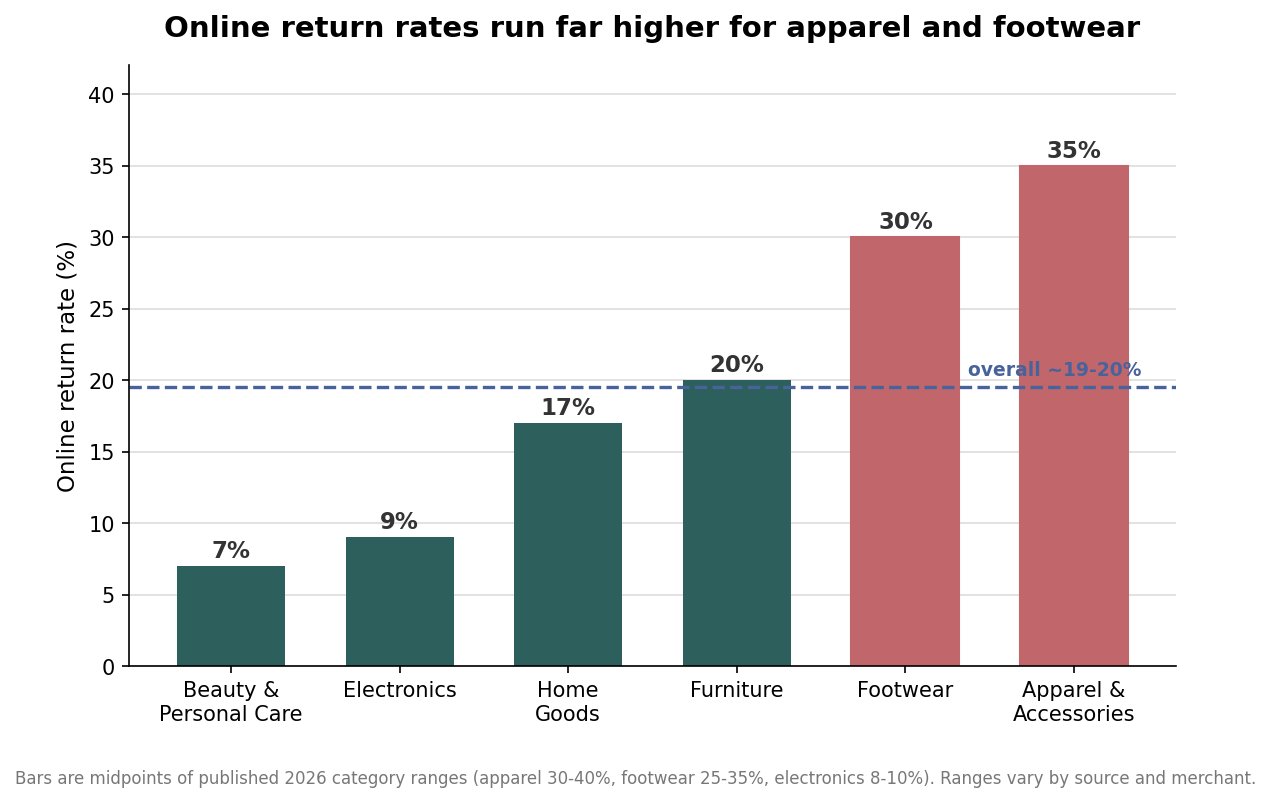
Before designing anything, it helps to see what a return actually costs, because that number is what justifies spending an extra field or two on the slip. Published 2026 benchmarks put the overall U.S. ecommerce return rate near 19 to 20 percent, with apparel and accessories at 30 to 40 percent and footwear at 25 to 35 percent, while electronics sit lower at 8 to 10 percent and beauty lower still. In-store returns, by contrast, run a milder 5 to 9 percent, which tells you the online channel carries a structural disadvantage the slip can help offset.
The processing cost per return is the other half of the math. Reverse-logistics estimates land around $10 to $20 to process a returned general-merchandise item and $30 to $65 for electronics that need testing and refurbishment, and none of that includes the margin lost on the sale itself. When a return costs that much to handle, a slip that converts even a small share of returns into exchanges, or heads off a mis-routed package, pays for its own design many times over. And it matters most in January, when post-holiday returns spike 30 to 50 percent and every avoided support ticket counts double.
Put the return path on the slip itself
The single most useful change is to print the return path directly on the slip rather than assuming the customer will hunt for it on your site. That means the order number in large, unambiguous type, the date the return window closes stated as an actual calendar date rather than “within 30 days,” and a short URL or QR code that opens your returns portal pre-filled with that order. The goal is that a customer holding the slip never has to type an order number, dig through email, or guess when their window ends. Every one of those small frictions is a reason to email support instead, and each one is avoidable in ink.
Printing a firm calendar date does something subtle beyond convenience: it removes the ambiguity that generates disputes. “Within 30 days of delivery” invites an argument about which day counts; “return by September 11, 2026” does not. If your system can merge that date onto each slip at print or pack time, it is worth the setup.
Design the slip to nudge an exchange
A return and an exchange cost you very differently. A refund is lost revenue plus reverse-logistics cost; an exchange keeps the sale and only adds the shipping. A well-built slip tilts customers toward the exchange without hiding the refund option. The practical move is to present the exchange as the default first step on the return instructions, with wording that assumes a size or color swap is the likely reason, since for apparel and footwear it usually is. Offering store credit at a small bonus, stated plainly on the slip, is another lever that turns a would-be refund into retained revenue.
This is also where a personalized note earns its place. A slip that addresses the customer by name and references the specific product reads as service rather than paperwork, and customers extend more patience to a brand that feels attentive. The return instructions can share the same panel as a short thank-you without the slip feeling cluttered.
Choose a format that becomes part of the return
The physical construction of the slip can carry weight here. A perforated slip lets the customer tear off a return section to include in the box while keeping their own record, and a duplicate or carbonless format gives both the warehouse and the customer a matching copy without a second print run. For brands that run their own returns, a slip with a detachable, pre-addressed return portion turns the document itself into the first step of the process rather than a thing to be set aside and lost.
Format also has to survive the warehouse and the round trip. A slip that will be handled, folded into a mailer, and possibly sent back should be printed on a stock heavy enough to stay legible, which is usually a bond weight rather than thin copy paper. The exact weight is a judgment call based on how the slip is handled, but the principle is simple: a slip that smears or tears defeats the purpose of printing the return path on it at all.
Specify it so it prints right the first time
Turning all of this into an order comes down to a few decisions. Fix the trim size to something that fits your mailers and your printer’s stock, commonly a half-letter or A5 slip for most parcels. Decide which fields merge per order, the order number, the return-by date, and the portal link or code, versus which are printed the same on every slip, such as your logo and the standing return policy. Then match the print method to the volume: variable data that changes with every order points toward digital printing, while a large run of identical branded slips can go offset for a lower unit cost.
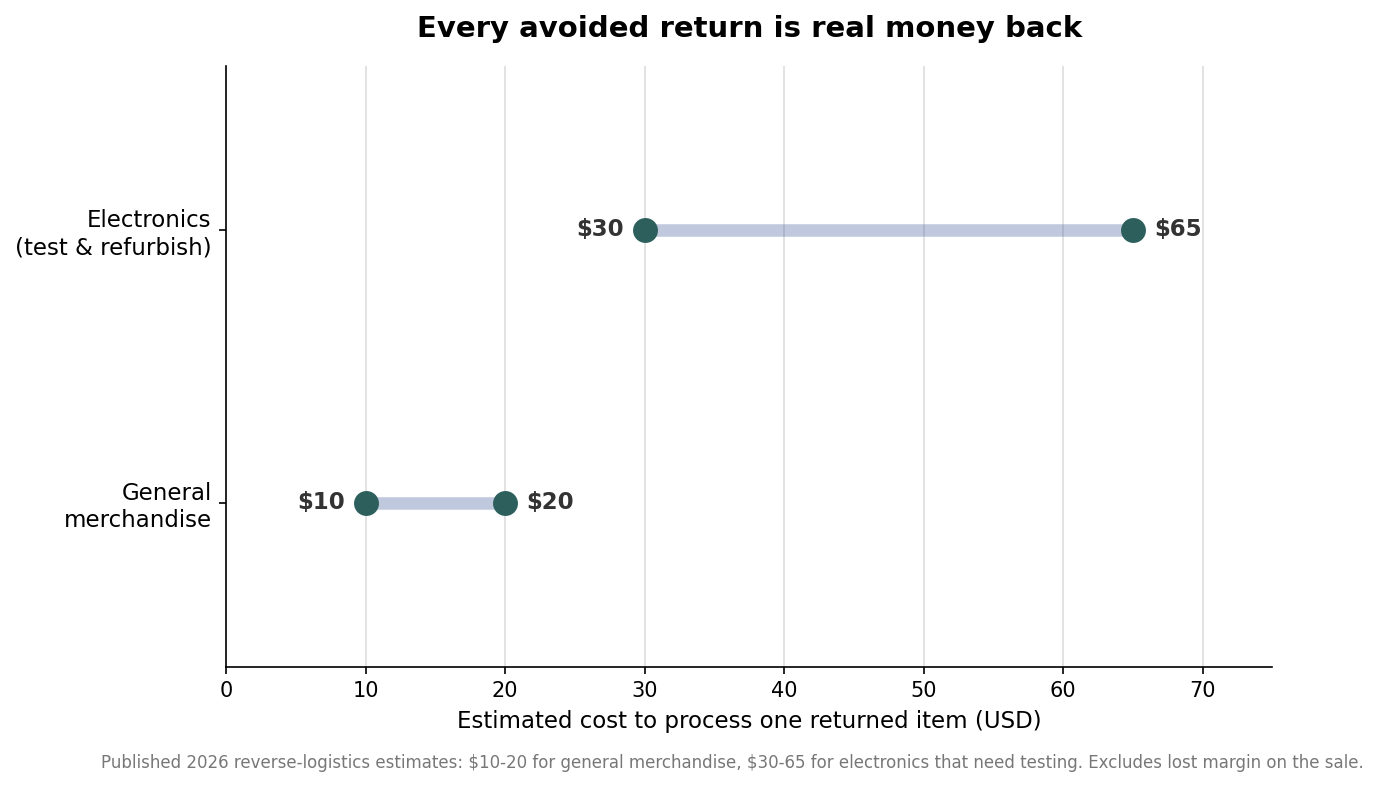
The chart above is the reason to bother with any of this. When processing a single returned item runs from $10 into the tens of dollars, the packing slip is a rounding error by comparison, and any design choice that converts a return into an exchange, or simply stops one confused email, returns far more than it costs. Decide the fields by the job the slip has to do after the box is opened, spec the format and stock to survive that job, and the paper in the box starts working for you instead of just riding along.
Leave a Reply